
Week of 4/19: Christina Park
Friends,
Homelessness is on the rise in Delaware. In 2025, there were 1,585 documented homeless people, which is a 16% increase from the year prior. Almost 20% of these households have children. Many have disabilities, and far too many are veterans. You may have heard of the controversial “tent city” that arose in Christina Park to address this issue. I visited that encampment to meet the residents and the volunteers who help them.
I first met Bryan. His group was operating a fish-fry to feed the residents. Bryan volunteers his time because he was once in their shoes. He credits a community with empathy and compassion for his 26 years of sobriety, and now dedicates his time to helping others. He doesn’t think this encampment is enough.
I met Lamont, who was another volunteer. Lamont believes the encampment won’t solve the bigger problems. He wonders why our homeless are sleeping in leaky tents in a public park, rather than in one of the many empty buildings in Wilmington. He notes the tension between the residents of Christina Park and the rest of the community. He was angry.
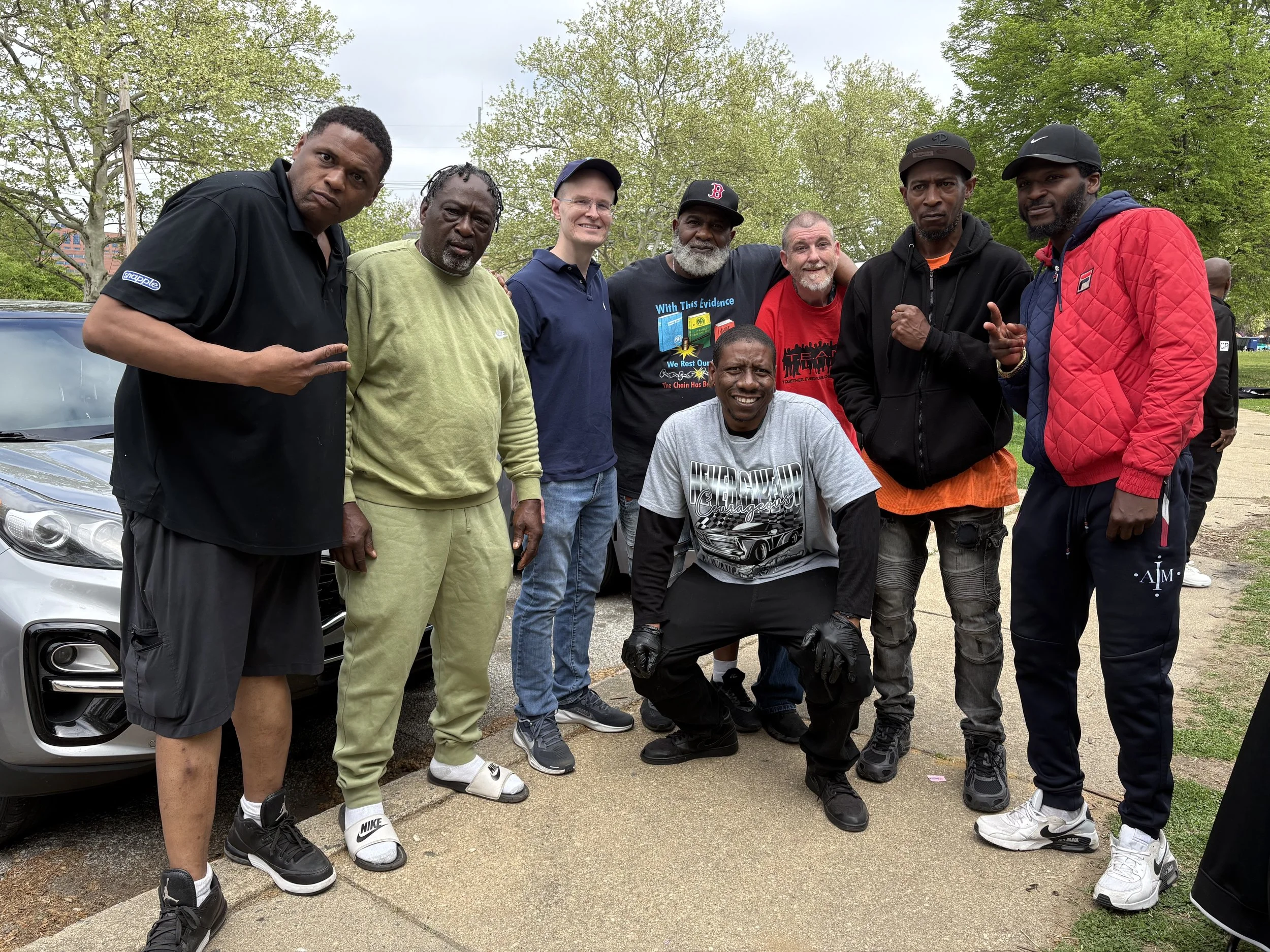
These are some of the volunteers we met at Christina Park, including Bryan and Lamont. We did not want to invade the privacy of the residents of Christina Park.
I met Richard, who was volunteering for the 1 in 7B Foundation. They were there with a mobile hygiene truck to help residents with showering and laundry. They come twice a week. Church communities were there to help as well, providing food and clothing.
I met several residents of Christina Park. They are grateful, but there are problems. The city-issued tents are not waterproof. They are not allowed to use their own – they are told this is for “aesthetic” reasons. Their belongings were taken from them. It was no way to live.
There was one common thread when asked what government could do to help. All wanted visibility and community. They wanted to be seen and heard. They wanted to be treated like human beings.
I join my voice with those who have already spoken: we must treat others like we would want to be treated. Provide waterproof tents, or allow the residents to use their own. Let people have their belongings – these cherished items may be the only things keeping them going. Aesthetics does not justify cruelty.
To those in power: any of us can find ourselves in a situation where survival requires the compassion of others. Wealth and influence does not make us invincible.
Homelessness is a complex problem that requires nuanced solutions. How we respond should be data-driven and respectful. Solutions should be financially sound, promote safety, and improve health. I support the following initiatives:
A housing-first model. Some believe that housing support should be reserved for those who first achieve sobriety. I believe we need to meet basic needs like housing before sobriety and good health are possible. Housing must come first.
Increased housing options. We need more supportive housing, like that offered at the Hope Center. The Hope Center offers longer stay housing, medical care, and social services. Some people need that. Some may just need motel vouchers. The only cure for homelessness is housing.
Repurposing abandoned buildings. We have abandoned buildings that can serve our homeless population and provide affordable housing. Money spent here puts Delaware to work, stimulates our economy, makes our communities safer, and helps people in need.
A ban on shelters forcing residents to choose between housing and their mental health. This is a story that is seldom told in Delaware, but as an emergency room psychiatrist I see it happen all the time. Some shelters discourage the use of prescribed psychiatric medications. It comes from a place of ignorance and stigma. Residents choose housing over treatment, decompensate, and end up in the hospital. This harms people and costs the taxpayer money.
An interstate compact to reduce ferrying of homeless people. Though this issue is largely overstated, it is still happening. Patients with complex needs from surrounding cities end up in our emergency rooms when they have exhausted resources in their communities. We should expect neighboring states to proportionally match any increase in funding. Otherwise, this problem will only worsen in Delaware. We are all in this together.
I support progressive policies that pay for themselves. This is a situation where we can both do the right thing and save money. Ask any doctor or nurse – our hospitals are seeing historic volume and complexity. Homeless patients stay in the hospital far longer than needed because there are no resources to discharge them safely. Costs rise and the taxpayer is on the hook. Medicaid now costs us over a billion dollars a year. Instead of this inefficiency, we could spend that money caring for our neighbor and fixing the problem. We can be bold. We can do better.
If you or a loved one is in need of emergency shelter, please contact the Homeless Helpline at 1-833-FIND-BED. They are available Monday-Friday, 8:00AM – 5:00PM. For more resources, please visit Housing Alliance Delaware.
If you are homeless in Delaware, know that you are loved. Let’s keep fighting for a better future.
Until next time,
Dr. Rob Bahnsen
Candidate for State Representative, District 12