
Week of 12/15: School Redistricting
Friends,
All parents ever want for their children is to find happiness and success. This past week, I joined hundreds of teachers, parents, former students, concerned neighbors, and many of our elected representatives at Mt. Pleasant Elementary School to discuss the proposed changes to our school districts. I wanted to share my thoughts.
First, I want to tell you where I’m coming from. I am a product of New York public schools. My parents were middle-class people who worked multiple jobs, and life could get stressful for them. One thing they never worried about was our education. They never had to think about charter schools, choice, or waitlists. Private schools were unheard of. We got a great education in safe and nearby schools, and it worked out well for us.
Imagine how confused Steven and I were when we moved to Delaware and learned about our current system. It’s a complicated web of different types of schools with different funding sources, governance, and outcomes. Delaware’s parents are stressed out trying to navigate it all.
Delaware has spent decades trying to study and fix the problems that plague our schools. The Redding Consortium is the latest group working on these problems. They were formed in 2019 after the passing of HB222 and SB148, and later amended in 2023 with HB229. On Tuesday, December 16th, they will vote on a plan that removes at least two school districts from the city of Wilmington, and may consolidate all four of our school districts into one. They hope this plan will improve school performance, increase coordination of services, and decrease costs.
Our community has raised many concerns. The recently released AIR Financial Analysis suggests that costs will actually increase. Requested data is unavailable, and some question why we will study a plan only after voting on it. There are no clear plans to address social drivers beyond simply redrawing the lines.
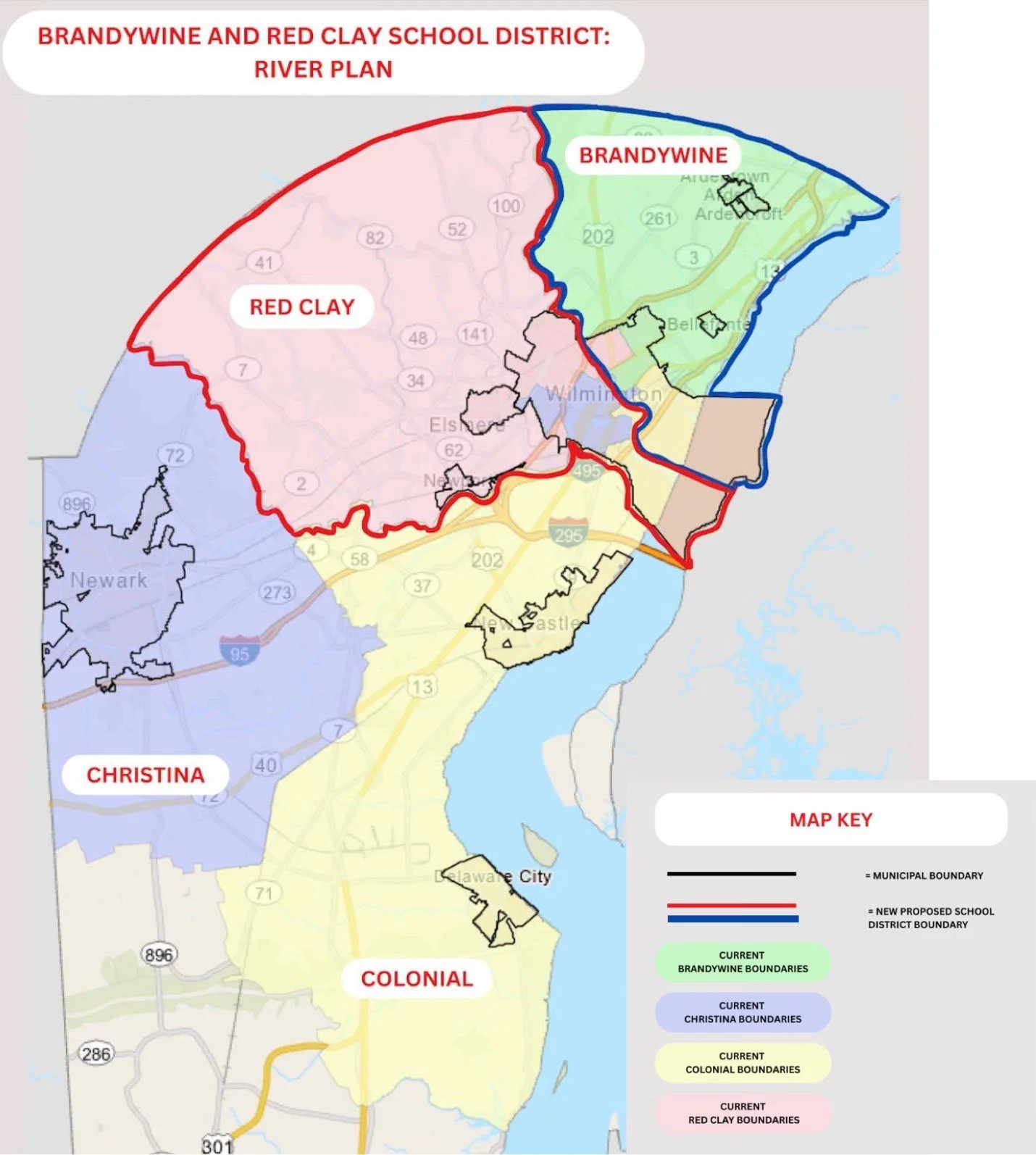
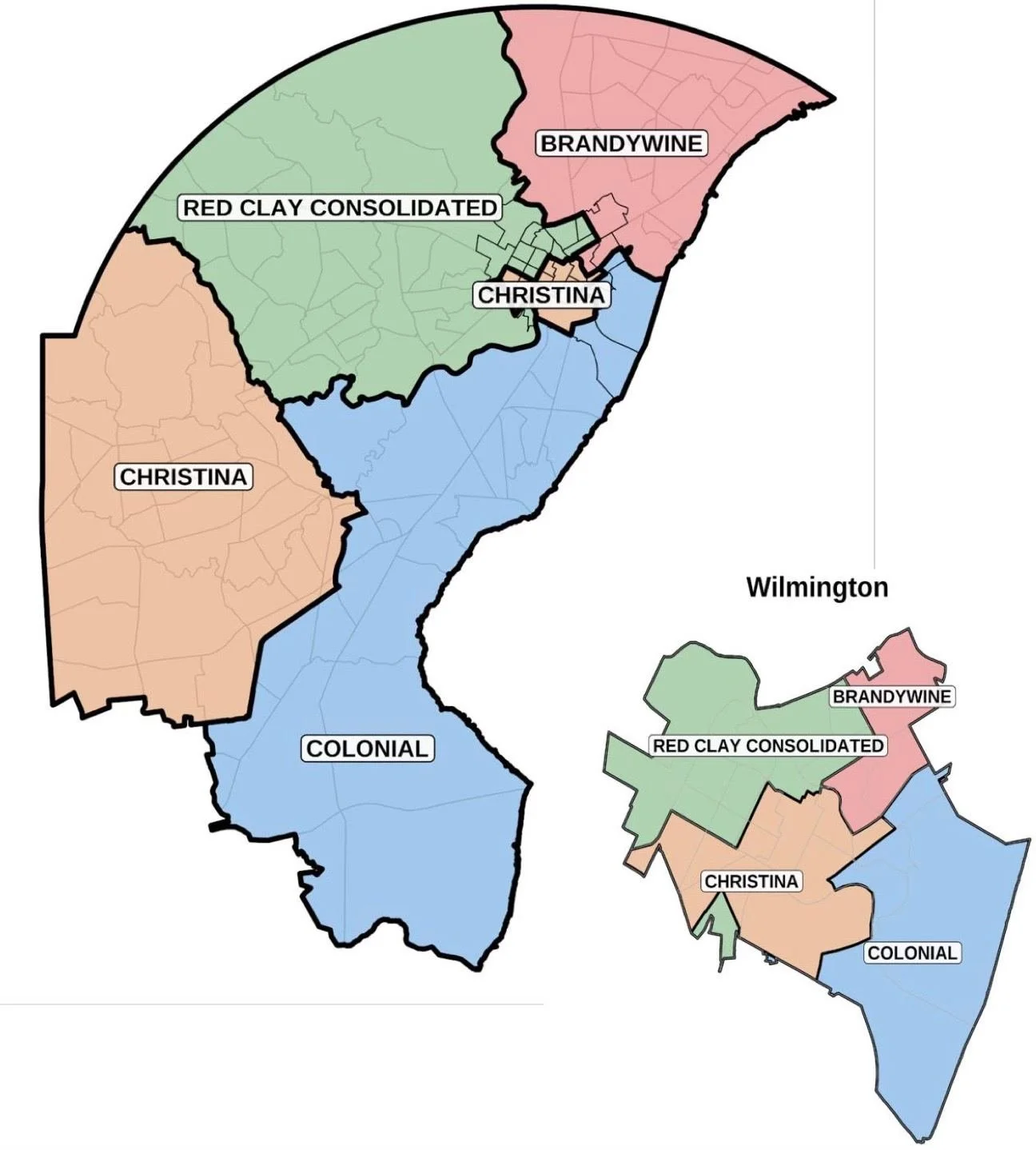
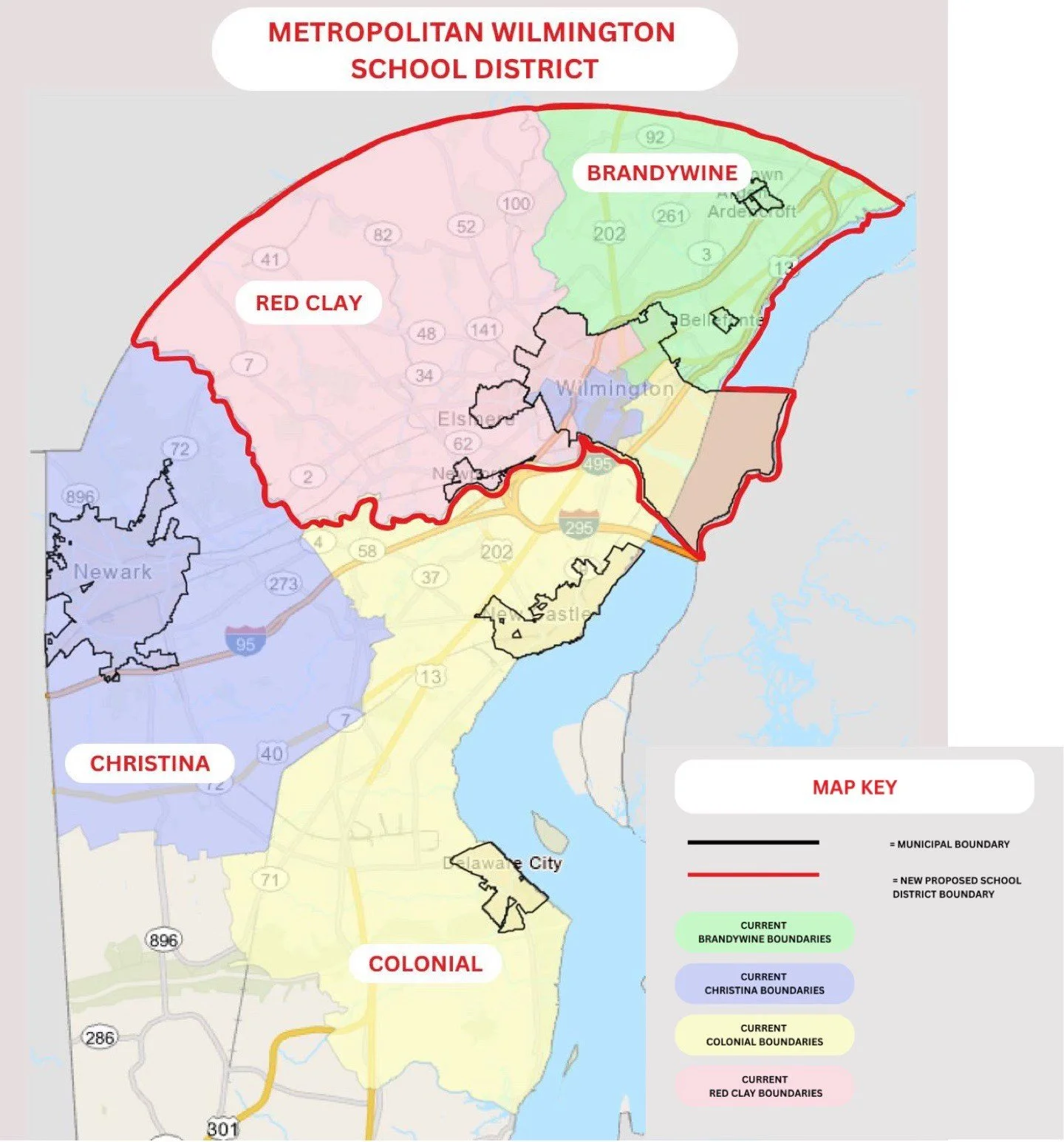
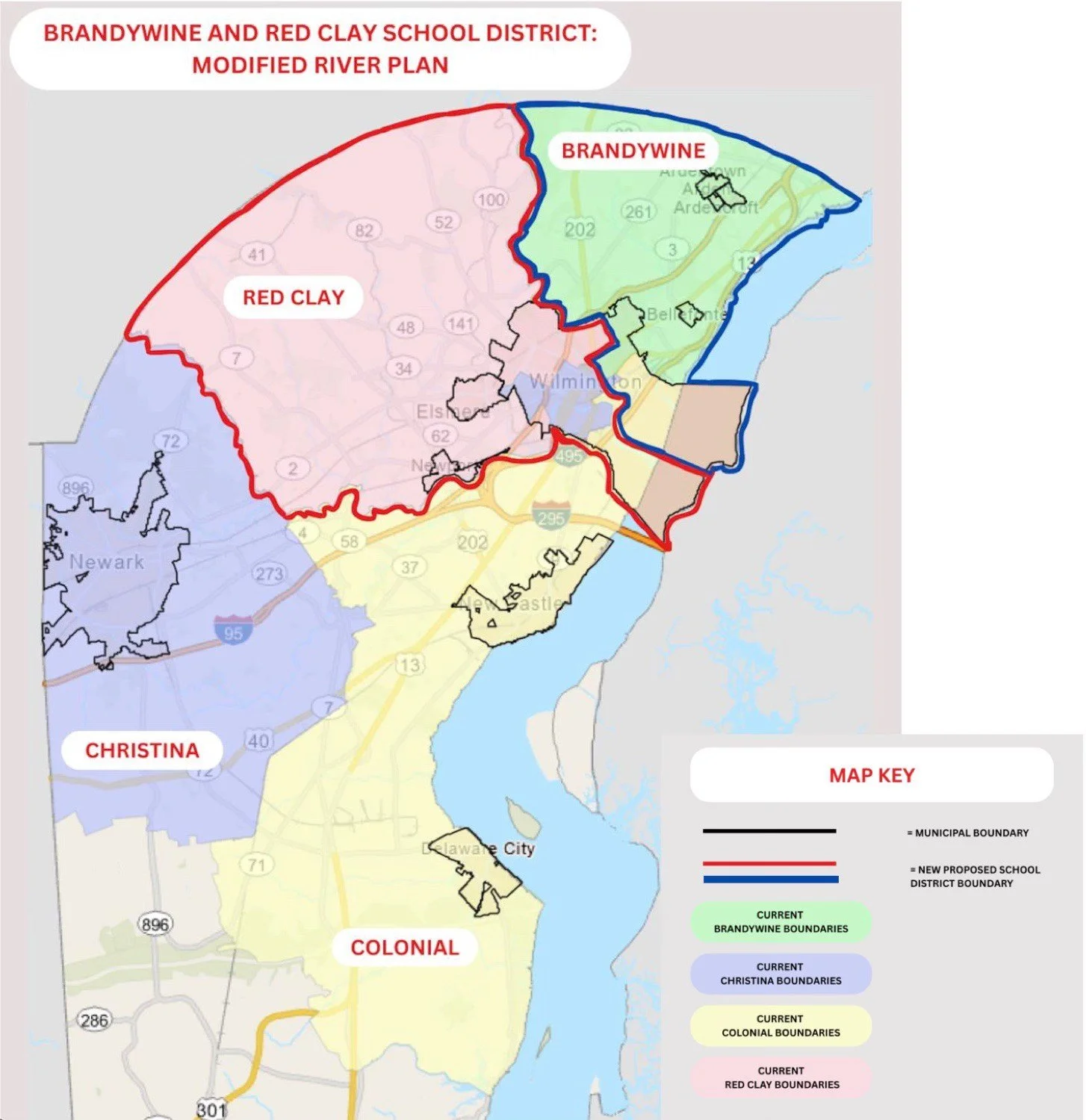
Before I share my thoughts, I want you to know a few assumptions I hold:
• Delaware’s parents did not create our public school system, and alone they cannot fix the social drivers. Parents should not be blamed if they choose to remove their children from the system entirely. I respect any parent that advocates for choice and other options.
• Educating our children and preparing them for the future is our greatest responsibility. Any changes we make should not feel experimental. Anything we do should be data-driven and transparent. We should not rush into a solution without full understanding of the potential consequences.
• During this campaign, I have spoken to hundreds of people about our public schools. Though we have different ideas, I’ve yet to meet someone who has bad intentions. We all believe that every child deserves a quality education and opportunity to thrive in Delaware.
It’s also important you know where my information comes from:
• The 2025 KIDS CHOICE Data Book from the Annie E. Casey Foundation (https://assets.aecf.org/.../Aecf-2025kidscountdatabook.pdf)
• The 2025 NEA Rankings and Estimates Report (https://www.nea.org/.../2025_rankings_and_estimates...)
• The Center for Education Policy Research at Harvard University (https://educationrecoveryscorecard.org/states/delaware/)
• The Social Drivers of Health and Education Landscape Analysis, completed by AIR Consulting for the Redding Consortium (https://bpb-us-w2.wpmucdn.com/.../RCEE...)
• The wide body of research and data available at https://www.solutionsfordelawareschools.com.
Delaware’s children are not performing well in school. 74% of our fourth graders are not proficient in reading. 81% of our eighth graders are not proficient in math. 12% of our high schoolers do not graduate on time. A third of our statewide budget is spent on public education, and yet we rank only 37th in the nation according to the AECF. This ranking is actually an improvement from the year prior, but only because other states are becoming much worse, much faster.
The number of teachers in our public schools declined from 10,144 to 9,841 last year. The number of children enrolled in our public schools increased from 141,729 to 142,156. There are now 14.4 students enrolled per teacher. Only Alabama and California had a larger one-year increase in student to teacher ratio. Our teachers are leaving, and more students are enrolling.
Let’s narrow in on the two school districts that serve District 12 – Red Clay and Brandywine. Since 2009, children in both Red Clay and Brandywine School Districts have declined in reading and math performance. There was a large decline in 2019 – when COVID started – and though there has been recovery in both districts, none have returned to their baseline level of achievement.
So why is this happening? I have to be honest – I am left unconvinced that school district lines are the cause, or the cure. There’s just no convincing evidence. It’s clear we need to do something, but I am not convinced that this is the first thing to address.
Let me share some additional data:
Delaware ranks 30th nationally for overall child well-being. 15% of our children live in poverty, 26% have parents who lack secure employment, and 24% live in households that are unaffordable. 9.2% of Delaware babies are born with low birth weight. 5% of our children do not have health insurance. 31% of our children and teenagers are considered overweight or obese. 41% of our children are in single-parent families. 11% of our children are in families where the head of household lacks a high school diploma. 3% of our children live in high-poverty areas.
Here's some information that comes straight from the Redding Consortium:
In the city of Wilmington, between 2022-2024, 21% of students changed schools at least once, and of them 11% changed schools three or more times. Math and reading scores drop the more a student changes schools. Family stability has a direct impact on the number of times a child has to move schools.
Students who are chronically absent from school tend to have lower academic performance. Chronic absenteeism is most highly concentrated amongst students in the city of Wilmington, and is linked with social drivers.
After school programs are strongly linked to improved performance in schools. In the vast majority of District 12, children live within a 15-minute walk from a community center of some kind. In neighborhoods like Southbridge, Browntown, Brandywine Hills, North West, East Side, and Harlan Park, children sometimes do not have the same access. Other factors that restrict access include high cost, misalignment with school schedules, safety concerns, and lack of safe and reliable transportation.
The city of Wilmington already contains many programs that address social drivers. The people I met at the LACC serve as a one-stop shop for programs that help our neighbors with legal concerns, housing affordability, healthcare access, financial planning, access to food, and other resources. For the city of Wilmington, there are 137 programs to address housing, 132 for healthcare, 97 for mental health, 52 for transportation supports, among many others. The problem isn’t the lack of supports, it’s about funding and access. For those programs interwoven in our four school districts, there is such variability and lack of coordination that when students move schools, often their supports do not come with them.
Here's where I currently stand on this issue. The lines matter less than the social drivers. We are focusing on the wrong thing first. Choosing a redistricting plan without transparency and without a full understanding of the consequences of that plan puts our children’s education and their future in danger. There is convincing evidence that addressing social drivers can achieve our shared goals regardless of school district lines, and doing so first will have a more immediate and lasting impact for our children, particularly those in the city of Wilmington. I believe that the Redding Consortium has a very good and correct understanding of the social drivers, but I wonder if they lack the political backup in the General Assembly to enact larger reforms.
Your State Representative needs to be someone with the dedication and training to think through complex problems in a data-driven and transparent way. We need someone who can build consensus, and who will show up to learn. We need someone who is less wrapped-up in being a politician and more interested in taking the hard votes that put people first. I’ve spent my entire professional life fighting for and enacting systemic reforms that protect vulnerable Delawareans.
District 12 is large and influential. We can lead Delaware not only on this issue, but many others.
I look forward to hearing more of your feedback – my email is rob@robbahnsen.org, and my phone number is 302-267-6432. Let’s continue this work together and get it right.
Until next time,
Dr. Rob Bahnsen
Candidate for State Representative, District 12